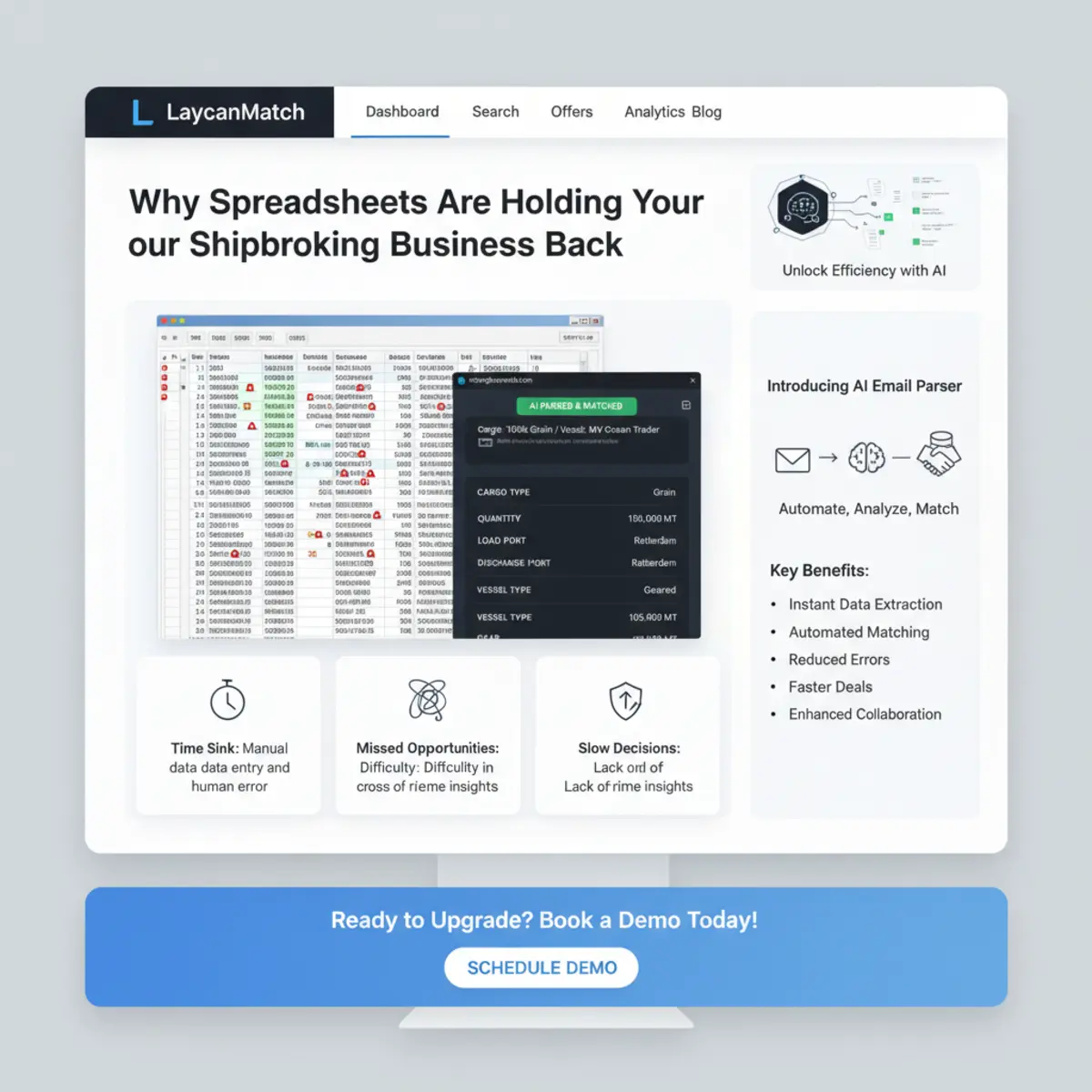
Spreadsheets are useful only after someone has already copied the broker email into rows and columns. The problem is that shipbroker offers move faster than manual data entry. By the time a sheet is updated, a laycan window may have changed, a new vessel may have appeared, or a better cargo may already be buried in another thread.
| Spreadsheet problem | Broker impact | LaycanMatch workflow |
|---|---|---|
| Manual data entry | Slow updates | AI extraction from selected folders |
| No source context | Hard to verify fields | Source email linked to each offer |
| Outdated rows | Missed matches | New emails processed automatically |
| Weak matching logic | Manual comparison | Ranked score by route, laycan, size and confidence |
| No alerts | Broker must keep checking | Telegram alerts per saved position |
The broker problem
Spreadsheets look organized only after someone has already copied broker emails into rows. The real cost sits before that moment: reading long email threads, deciding what matters, copying fields by hand and trying to keep the sheet current while new offers keep arriving.
What changes with structured email processing
Structured email processing extracts the cargo or vessel data first, then gives the broker a searchable record linked back to the source email. The broker is no longer forced to choose between a stale spreadsheet and an unsearchable inbox.
Example workflow
A desk tracks Black Sea grain cargoes in a spreadsheet. By the time the broker enters a 42k wheat cargo, two other messages have already updated the laycan and destination options. In LaycanMatch the selected folders are processed first, and the broker sees the freshest extracted record with the original email still attached.
What LaycanMatch does
LaycanMatch imports selected folders, classifies messages, removes duplicates, extracts structured offer fields and ranks matches against saved positions. CSV/XLSX export still exists, but only after the broker has a cleaner working dataset.
What still stays under broker control
The broker still decides which offers matter, what should be exported, which counterparties deserve a call and whether an ambiguous extraction needs review in the source email.