What the workflow problem is
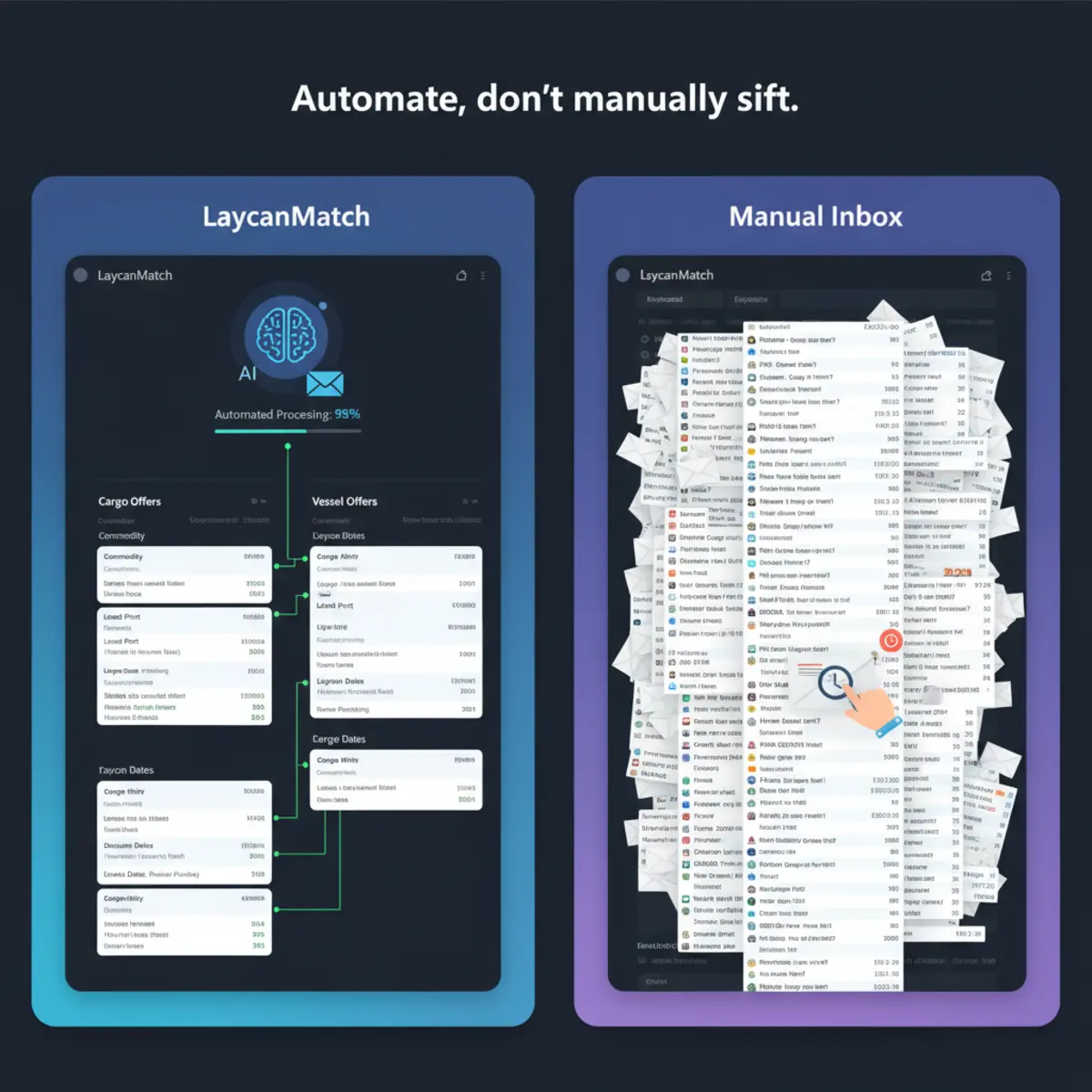
Manual inbox work keeps the original message close but requires repeated reading, searching and re-keying. It can work at low volume when one person knows the mailbox well.
What LaycanMatch supports
LaycanMatch adds scoped import, structured fields, offer filters, review state, duplicate handling, saved positions and ranked matching while retaining source access.

Important product boundary
Extraction can be uncertain and requires review. The product does not replace negotiation, counterparty checks or fixture approval.
How to evaluate it
Select a representative email period and ask both workflows to find the same cargo, vessel and route candidates. Record misses, corrections and time spent.