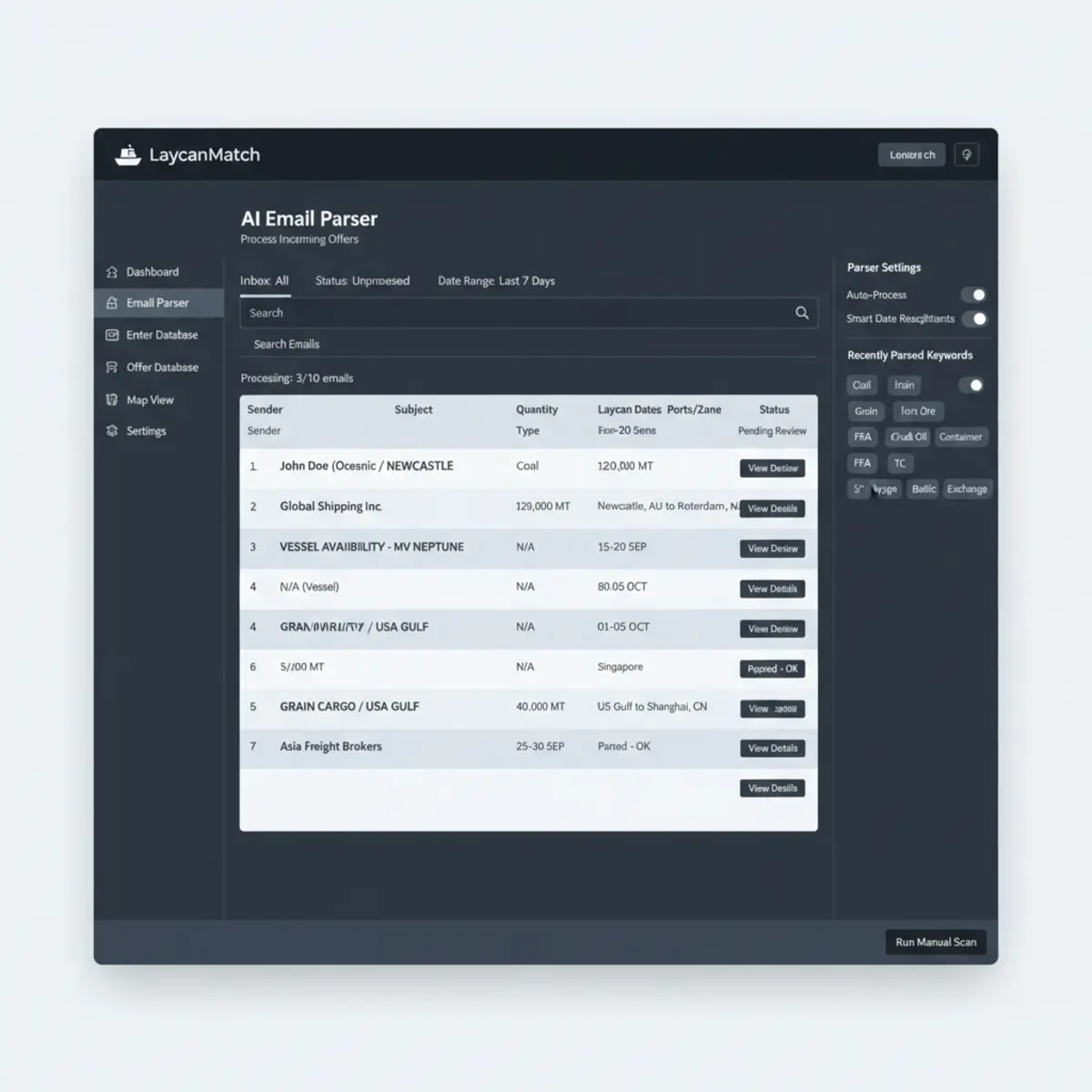
Short answer: LaycanMatch takes authorized broker emails, classifies them, extracts structured cargo and vessel fields, keeps source context and ranks possible matches. The methodology is designed to make the workflow auditable, not magical: source email, confidence and matching factors stay visible so the broker can challenge the result.
How offer extraction works
The system first decides whether a message looks like a relevant cargo or vessel circular. It then extracts raw fields such as cargo type, quantity, DWT, laycan text, load port, discharge port, broker identity and source fragment. Normalization is applied where possible, but the original text is preserved.
One email can create multiple structured offers when a circular contains several cargoes or several vessel positions.
What confidence score means
Confidence reflects how complete and internally consistent the extracted record looks. A clear wheat 45k Constanta / Alexandria 22/28 July circular should rank higher than a mixed note with implied dates and vague geography.
| Confidence band | Typical meaning | Broker action |
|---|---|---|
| High | Fields are explicit and consistent | Review source and move faster |
| Medium | Useful record but some ambiguity remains | Check source before acting |
| Low | Dates, ports or offer split are uncertain | Treat as review-required |
How matching scores are interpreted
Matching uses factors such as route zones, ports, laycan overlap, DWT or cargo quantity fit, cargo type, confidence and recency. The point of the score is to order review, not to replace chartering judgment. A broker should still validate whether the commercially useful alternative is actually the best one.
What the system does not do
LaycanMatch does not promise perfect extraction, universal geography normalization or automatic fixture decisions. It is a workflow tool that keeps evidence visible and highlights likely matches.