Free tool
Paste one broker circular
Plain text only. Review the extracted fields before use. The public parser does not retain your circular after the response.
Review required
Structured result
Use the production workflow to import mailboxes, review sources and match opportunities.
Start freeWhat a broker circular parser extracts
| Entity | Reviewable fields |
|---|---|
| Cargo order | Commodity, quantity, load port, discharge port, laycan start and laycan end |
| Vessel position | Vessel name, vessel type, DWT, open position, open date, direction and ETA when present |
| Unresolved text | Ambiguous lines retained with a reason rather than silently invented data |
| Evidence | Every returned field includes a confidence value and source excerpt |
How to review results
High confidence means the parser found a comparatively clear source phrase, but the value remains reviewable. Review-range and low-confidence fields require closer inspection. Missing values appear as not found. Dates, ports, abbreviations and capacity should be checked before the result is used in a commercial workflow.
Use parsed data in LaycanMatch
This public tool handles one pasted circular and does not connect a mailbox, retain the input after the response or create a fixture. The production shipbroker email parser imports selected folders, classifies messages, stores reviewable offers, connects records to source emails and sends reviewed data into search and matching.
Cargo circular example
Paste: “40/45,000 mt wheat, Constanta / Alexandria, 20/25 July, 5,000 sshex, chrtrs Acme.” The result should identify a cargo entity and return commodity, quantity context, load port, discharge port, laycan and the terms that are actually present. Each field should include a confidence value and source excerpt. The parser should not add a freight rate, vessel, owner or exact year when the text does not provide enough evidence.
Vessel circular example
Paste: “MV NORTH STAR 56,200 dwt open Recalada 7 Sep, trips Atlantic / Med, grain clean.” The result should identify a vessel position with vessel name, DWT, open location, open date, direction and remarks where supported. It should not infer flag, class, build year, speed or consumption. If “7 Sep” lacks a reliable year context, the normalized date should remain reviewable and the original wording should stay visible.
Mixed circulars and several offers
One pasted message may list several cargoes, several vessels or both entity types. The response contract keeps them as separate records so fields from adjacent lines are not merged into one invented offer. Unresolved lines remain visible with a reason. Review whether each source excerpt belongs to the correct entity, especially when a circular uses repeated dashes, shorthand headings or a shared route note at the end.
Confidence is evidence quality, not commercial quality
A high-confidence port or quantity means the value has comparatively clear support in the pasted text. It does not mean the offer is current, the counterparty is reliable or the voyage is workable. Review-range and low-confidence fields require closer inspection, and “not found” is preferable to a plausible guess. After parsing, compare the result with the original circular before using it in a commercial conversation.
Public-tool privacy and operating limits
The public parser accepts one plain-text request and is designed not to retain the circular text after the response. Controlled logs may record request metadata, timing, result counts and error codes without storing the pasted body. Do not paste credentials or unnecessary personal data. The tool does not connect a mailbox, save an offer database, monitor new circulars, send notifications, calculate voyage economics or manage fixtures. Those boundaries keep the free test focused on extraction quality.
Recommended next
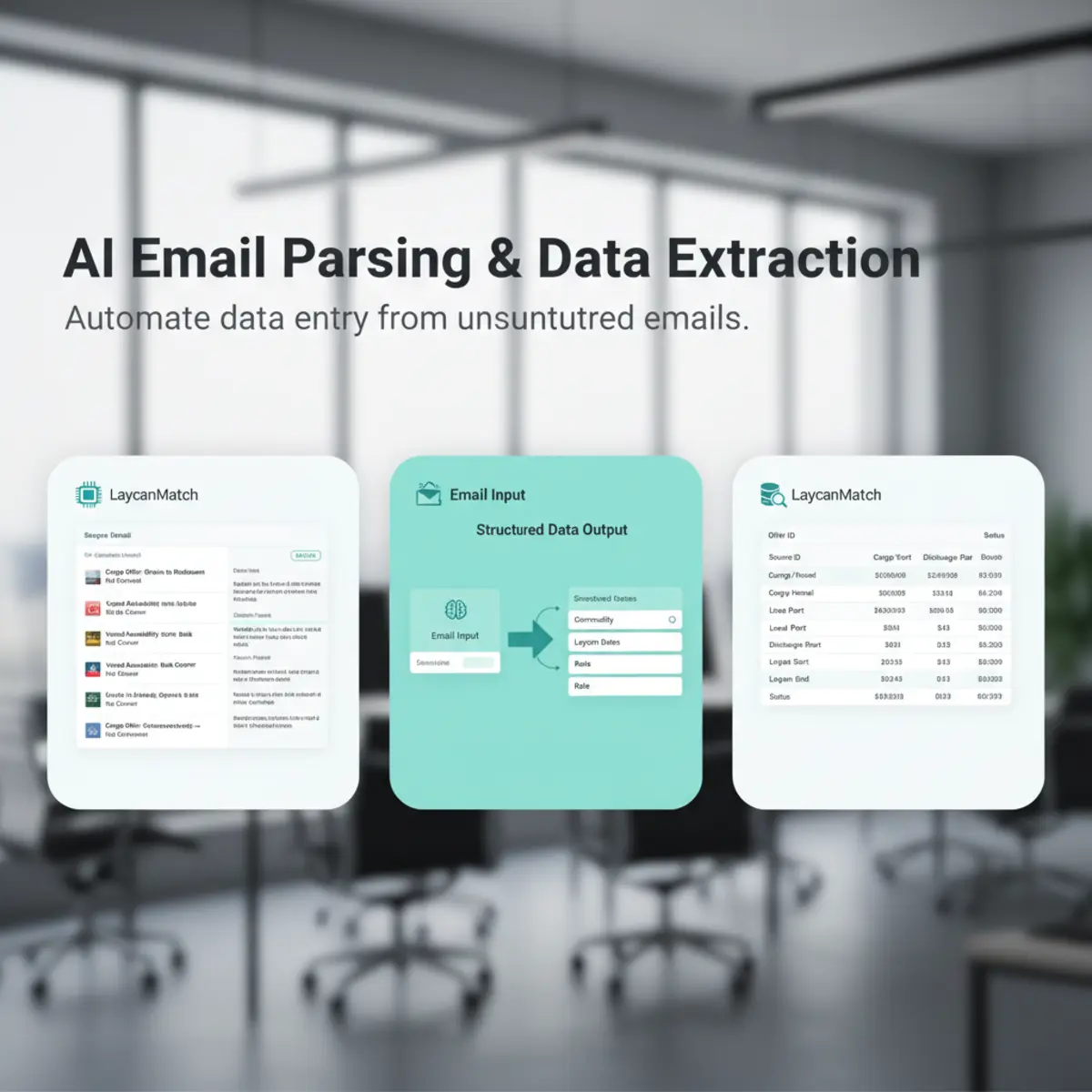 Shipbroker Email Parser for Cargo & Vessel Offers | LaycanMatchParse broker circulars and emails into structured cargo orders, vessel positions, laycan dates, ports, DWT and ETA without manual re-entry.
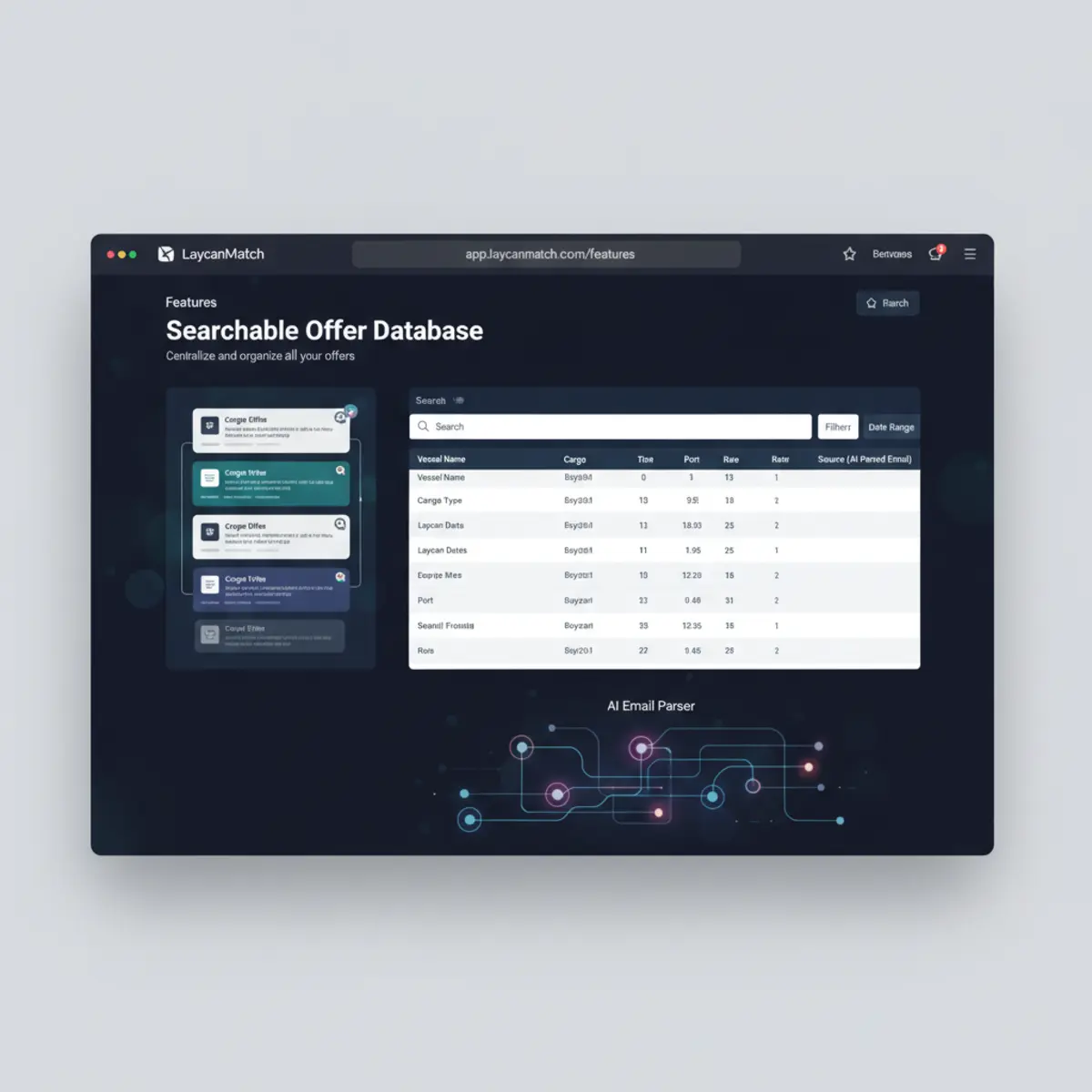 Cargo Orders & Vessel Position List Software | LaycanMatchTurn incoming broker emails into a searchable database of cargo orders and vessel positions. Filter open tonnage by laycan, ports, DWT and recency.
FAQ
Questions
Is the pasted circular stored?
The public MVP is designed with zero input-text retention after the response. Operational logs contain request metadata such as request ID, length, latency, counts and controlled error codes, not the circular body.
Can I upload an attachment?
No. The public parser accepts plain text only and does not render an upload control.
Can it return several cargoes or vessels?
Yes. The response contract supports multiple cargo orders, multiple vessel positions and unresolved lines.
Does it automatically anonymize the text?
No automatic-anonymization claim is made. Do not paste passwords, API keys or personal data that is unnecessary for the parsing task.
Why might a field be unresolved?
A date, port abbreviation, line separator or entity relationship may be ambiguous. The parser should retain that uncertainty instead of silently inventing a normalized value.
Early access
Get updates
Leave your email and get updates from LaycanMatch.
Editorial review
LaycanMatch Editorial Team · Reviewed 2026-08-30
Latest change: Aligned with the verified LaycanMatch product, search intent and claim register.
Public content is released through the governed editorial workflow. Read the editorial policy.