Core Data Requirements for Vessel Position Profiles
A commercial vessel position is an operational summary that describes a ship's immediate availability, physical characteristics, and geographical status for its next employment. When chartering desks evaluate spot market tonnage, matching efficiency depends on the completeness of core operational fields.
Every standardized vessel position record requires six foundational parameters: the vessel's unique identifier (IMO number and vessel name), opening port or delivery range, laycan date spread (earliest ready date and cancellation date), deadweight tonnage (DWT), draft limits, and cargo-handling gear specifications. When records omit baseline variables or present them as unstructured narrative text, matching systems cannot reliably verify whether a vessel meets the physical and geographic criteria of an open order.
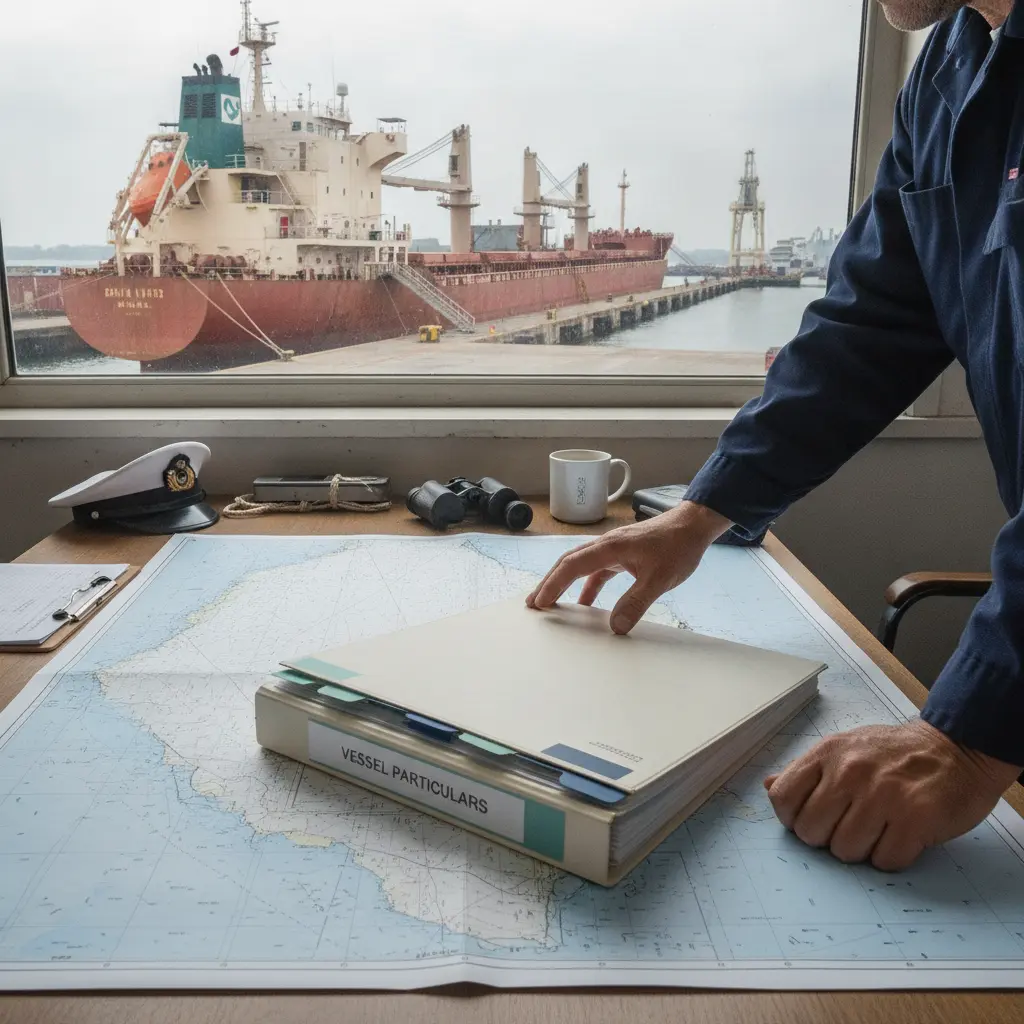
In addition to baseline metrics, comprehensive position records capture volumetric capacities such as grain and bale cubic volumes, hold and hatch dimensions, and commercial trading constraints. Maintaining these values in structured fields ensures that chartering teams evaluate candidate ships against cargo requirements without requiring continuous manual inspection of ship particulars.
Vessel Parameter Evaluation Matrix
| Parameter Category | Core Attributes | Matching Evaluation Purpose |
|---|---|---|
| Geographic Position | Open port, delivery range, current status | Establishes departure baseline for reaching required load areas. |
| Temporal Window | Earliest open date, cancellation date (laycan) | Determines alignment with cargo loading date requirements. |
| Deadweight & Draft | Summer DWT, Summer Draft, TPC, Freshwater draft | Verifies parcel weight capacity against terminal draft limits. |
| Volumetric Intake | Grain cubic, bale cubic, hold/hatch dimensions | Evaluates stowage factor suitability for low-density bulk parcels. |
| Cargo Handling Gear | Crane count, Safe Working Load (SWL), grabs | Confirms self-discharging capability for gearless ports. |
| Commercial Terms | Flag, build year, classification, trading limits | Checks regulatory, terminal, and basic charterer vetting criteria. |

Managing Laycan Windows and Operational Feasibility
The laycan spread (laydays and canceling date) defines the agreed window during which the vessel must present notice of readiness at the load port. In vessel position records, laycan dates must be recorded as explicit date values rather than vague market colloquialisms such as 'prompt', 'end month', or 'first half next month'.
Precise dates allow chartering systems to filter out tonnage that cannot physically present within the cargo's readiness spread. While automated matching tools evaluate date compatibility based on recorded opening dates and cargo laycans, determining the vessel's actual estimated time of arrival (ETA) requires external voyage calculations that account for sea margins, bunker stops, passage restrictions, and canal queues.
Recording explicit laycan boundaries prevents commercial teams from proposing tonnage that falls outside the charterer's operational window, reducing wasted communication cycles on unfeasible business.
Step-by-Step Vessel Position Setup Workflow
- 01
Verify Vessel Identity
Enter the official IMO number, vessel name, build year, flag state, and classification society to establish the asset's verified profile.
- 02
Define Opening Geographic Location
Record the opening port name, terminal, or recognized regional range where the vessel is scheduled to complete current discharge operations.
- 03
Set Laycan Availability Dates
Input the earliest readiness date and the latest cancellation date, accounting for planned hold preparation or redelivery terms.
- 04
Specify Deadweight and Draft Constraints
Document summer deadweight, maximum summer draft, and freshwater allowances to enable intake verification.
- 05
Input Volumetric and Hold Configuration
Record total grain and bale cubic capacity alongside individual hold layouts to support cargo stowage factor screening.
- 06
Detail Cargo Gear and Rigging
Enter crane quantities, safe working load (SWL) in metric tons, grab availability, and container intake limits if applicable.
- 07
Log Commercial and Trading Exclusions
Add commercial notes including ice-class certification, excluded trading areas, or cargo exclusions such as direct reduced iron or dirty bulk commodities.
Impact of Physical Dimensions on Cargo Compatibility
Physical dimensions determine whether a vessel can safely berth, load, and depart from specific terminals. A vessel position setup must include precise measurements for Length Overall (LOA), Beam, Summer Draft, and Air Draft to avoid proposing tonnage that exceeds berth restrictions.
Draft restrictions represent one of the most common operational constraints in dry bulk and tanker chartering. If a vessel position profile only captures deadweight without summer draft, matching tools cannot calculate the maximum cargo intake allowed under shallow berth conditions. Similarly, air draft limitations at load berths with fixed loading gantries can disqualify vessels regardless of deadweight suitability.
Volumetric capacity is equally critical for light and bulky commodities, such as agricultural grains, biomass, or woodchips. For these cargoes, the vessel may reach its maximum cubic volume before reaching deadweight capacity (cubing out). Capturing both grain and bale cubic capacities ensures accurate screening against cargo stowage factors.

Operational Scope: Position Matching vs Downstream Execution
| Workflow Stage | Handled by Structured Position Matching | Handled by Downstream / External Tools |
|---|---|---|
| Geographic Screening | Compares open port range against cargo load port | Calculates exact bunker burn, routing distances, and canal tolls |
| Temporal Screening | Filters records by recorded open date and laycan window | Calculates dynamic voyage ETA based on live speed and weather |
| Capacity Check | Compares parcel quantity against DWT and cubic limits | Computes exact stowage plans, stability, and ballast distribution |
| Commercial Verification | Records flag, class society, and trading exclusions | Executes formal P&I, sanctions vetting, and commercial negotiation |
| Offer Management | Parses circulars into reviewable vessel offer records | Manages charter party generation, signing, and fixture operations |
Processing Unstructured Email Circulars into Position Records
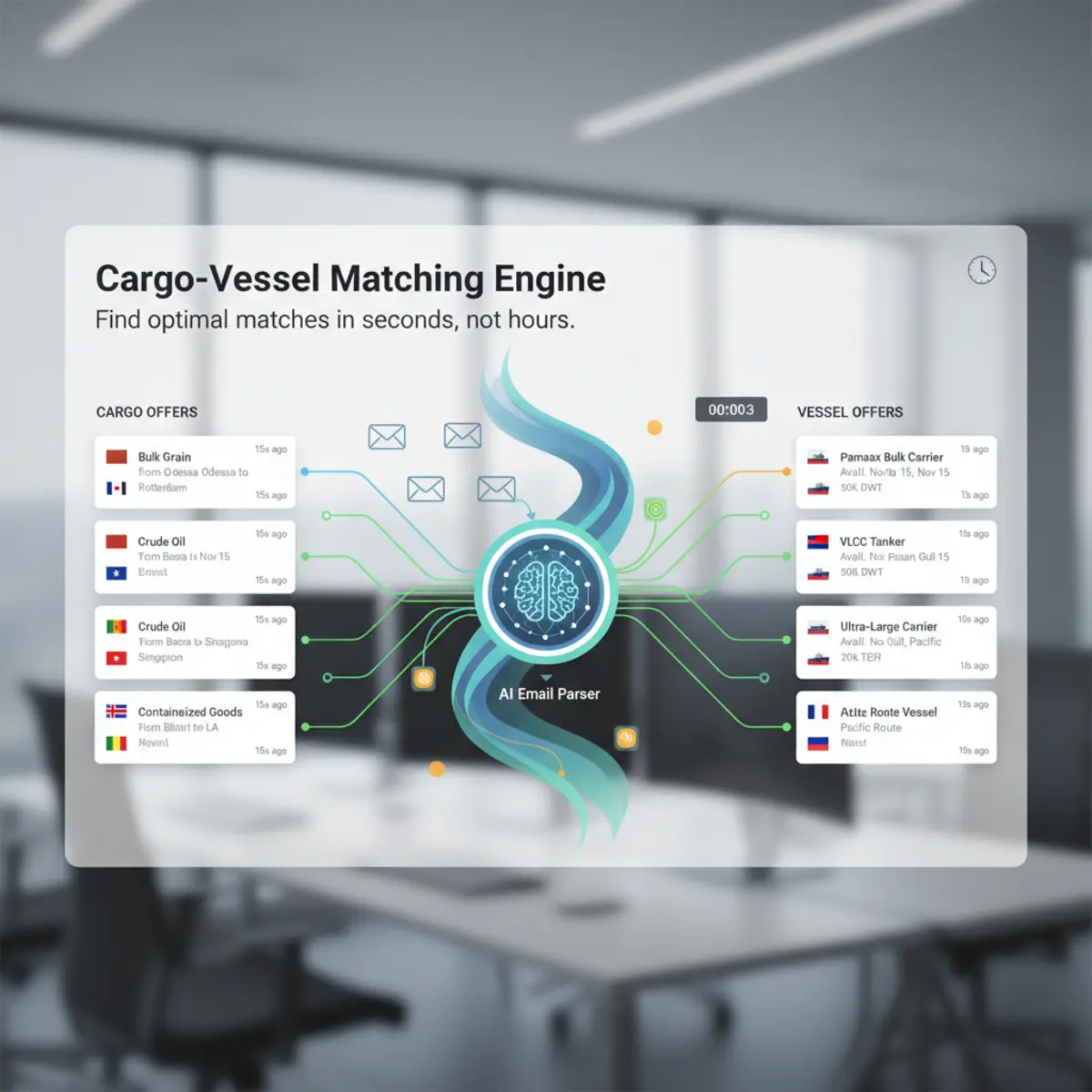
In standard commercial workflows, vessel positions arrive continuously via unstructured broker circulars, market updates, and fleet lists. Manually copying and pasting these details into spreadsheets creates administrative overhead and risks introducing transcription errors during peak trading periods.
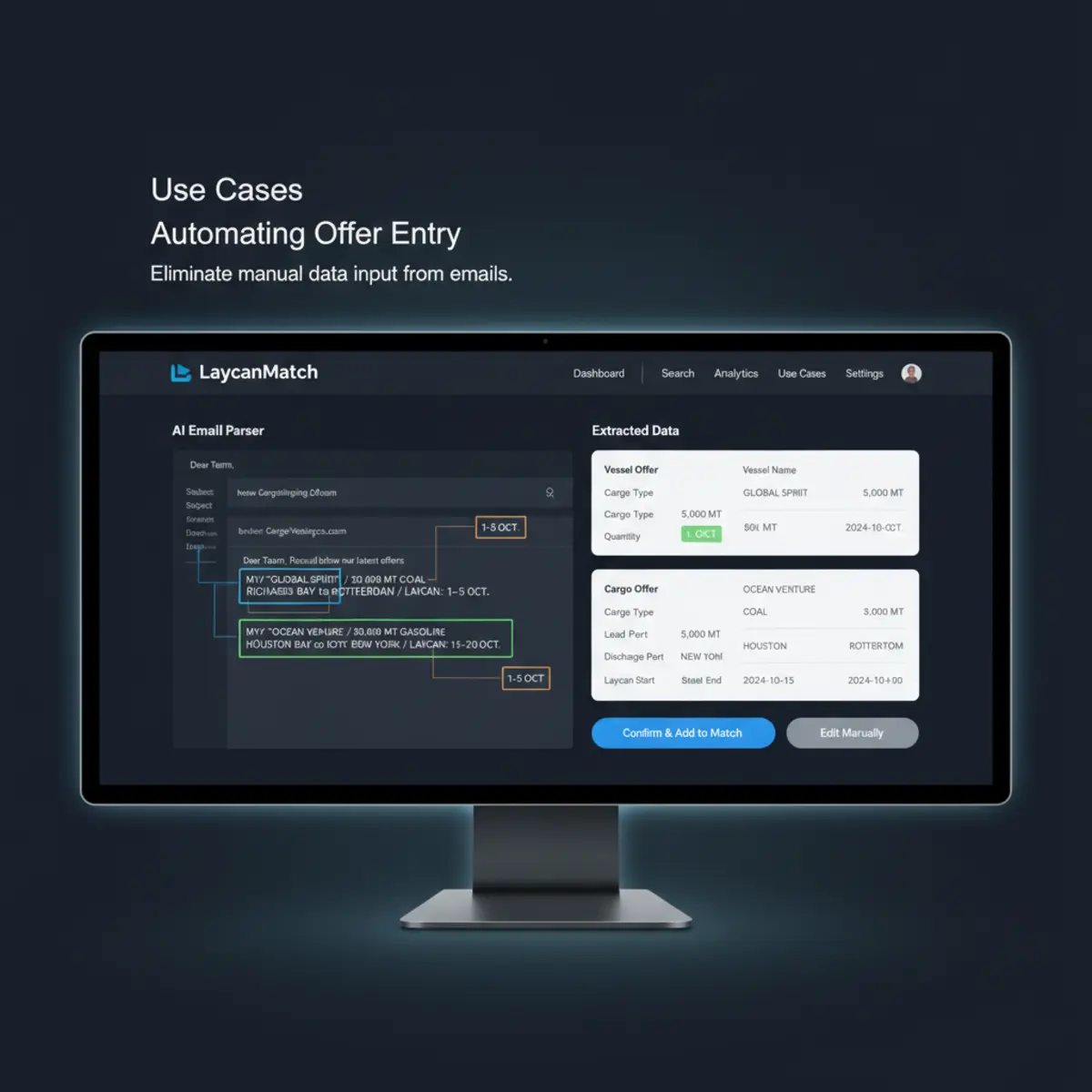
Authorized email ingestion allows chartering desks to convert incoming circulars directly into structured position records. Specialized parsing extracts vessel names, opening ports, dates, and gear specifications from message text. Because brokers frequently combine several positions in a single circular, parsing systems must support creating multiple distinct vessel offer records from a single email message.
To ensure commercial accuracy, parsed records should retain the original source email, raw text excerpt, extraction confidence rating, and an explicit review state. This allows shipbrokers to inspect and verify parsed parameters before acting on potential matches.
Example: Unstructured Circular to Structured Position Record
Unstructured Broker Circular Text:
'OPEN MV PACIFIC TRADER - PANAMAX - 76,200 DWT ON 14.2M SSW - BLT 2018 - MARSHALL ISLANDS - 4X30T CRANES + 12CBM GRABS - GRAIN 91,500 CBM - OPEN SPORE 15-20 MAY - INT WP/FAR EAST - NO PETCOKE/DRI'
Structured Position Record:
- Vessel Name: MV PACIFIC TRADER
- Vessel Class: Panamax
- Deadweight (DWT): 76,200 MT
- Summer Draft: 14.20 m
- Build Year: 2018
- Flag: Marshall Islands
- Gear: 4 x 30 MT Cranes + 12 CBM Grabs
- Grain Capacity: 91,500 CBM
- Opening Location: Singapore (SPORE)
- Laycan Spread: May 15 to May 20
- Intended Trading Area: Worldwide / Far East
- Excluded Cargoes: Petcoke, Direct Reduced Iron (DRI)
- Source Context: Retained for verification
- Review State: Pending Verification
Common Data Setup Errors That Hinder Cargo Matching
Incomplete or inaccurate position setups degrade the effectiveness of cargo matching workflows. One common issue is using broad regional descriptions, such as 'Open Continent' or 'Open Far East', rather than specific opening ports. Broad regions obscure the actual ballast distance required to reach the load port, making initial suitability evaluations difficult.
Another frequent operational error is omitting hold cubic capacities or crane Safe Working Load (SWL) ratings. Without gear and cubic parameters, matching workflows cannot evaluate geared requirements or high-cubic bulk parcels, requiring manual follow-ups to determine basic commercial viability.
Finally, failing to maintain review states and audit trails can result in desks negotiating on outdated information. Commercial teams should ensure that positions updated via incoming circulars clearly indicate their source timestamp and verification status so operators can distinguish firm updates from older indicative reports.
LaycanMatch Position Ingestion and Matching Capabilities
LaycanMatch provides a dedicated platform for structuring commercial shipping data, parsing authorized broker email content into distinct cargo and vessel offer records. A single incoming circular can generate multiple independent vessel position records, each linked to its original source text, confidence score, and operational review state.
The platform supports two-way screening workflows, enabling teams to perform cargo-for-vessel matching when seeking employment for open fleet positions, as well as vessel-for-cargo matching when covering active cargo orders. New accounts receive a 1,000 processed-email free allowance to evaluate parsing and matching workflows on live operational data.
For ad-hoc testing, the LaycanMatch public parser processes sample circular text with zero input-text retention after delivering its extraction response, preserving data privacy while demonstrating how unstructured maritime syntax converts into structured records.